Bonus Frameworks Driving Accumulator Performance in Live Sports and Casino Integrations
Sam Werner · Aug 31, 2026

Bonus Frameworks Driving Accumulator Performance in Live Sports and Casino Integrations
Data from multiple jurisdictions shows that bonus structures directly influence accumulator outcomes when operators combine live sports wagers with casino elements, and these mechanics have gained traction through August 2026 as platforms expand hybrid offerings. Operators deploy multipliers, free bet credits, and cashback tiers that activate only after specific conditions across both verticals get met, which alters payout calculations and risk profiles for participants who build multis spanning tennis in-play markets, football accumulators, and slot or table game spins.
Core Components of Integrated Bonus Systems
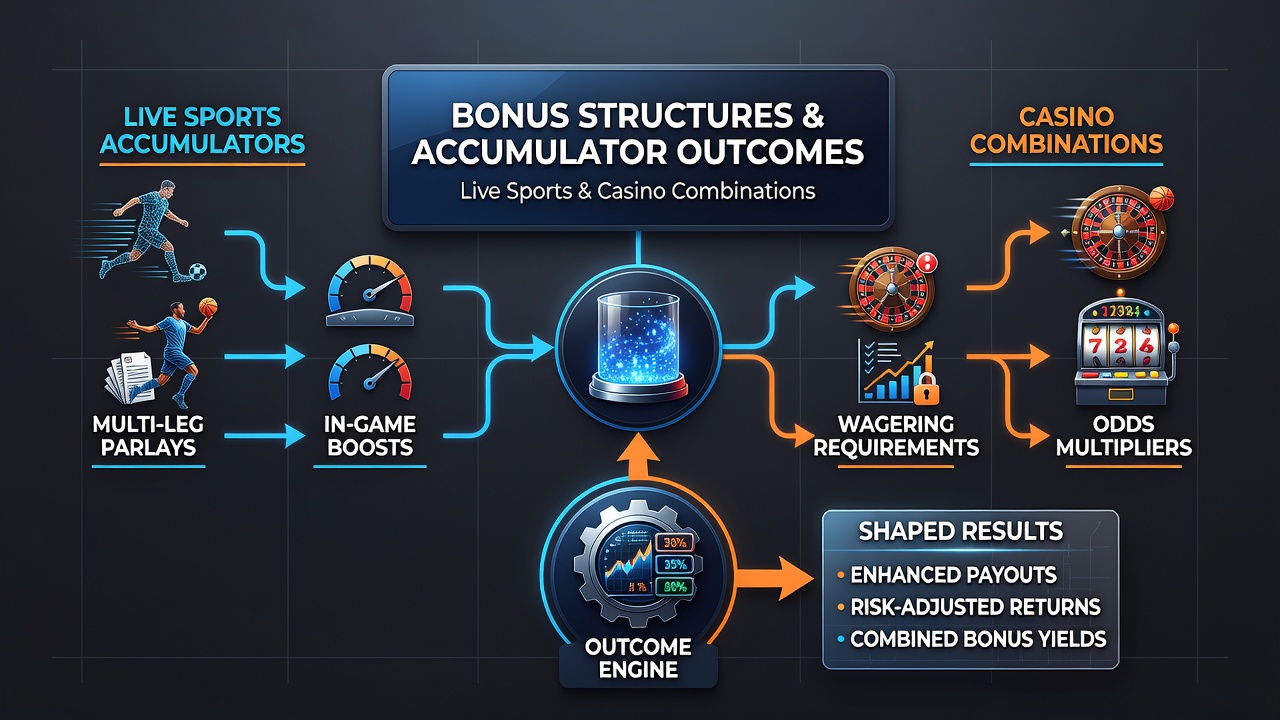
Accumulator bonuses often require a minimum number of legs from live sports alongside a casino wager threshold before any enhancement applies, and this structure encourages cross-category participation while capping operator exposure through staged release conditions. Research indicates that percentage-based boosts on total returns function differently from fixed stake additions, since the former scales with accumulator size whereas the latter remains constant regardless of how many selections succeed. Those who study operator terms note that time-limited windows for live events create urgency, whereas casino contributions frequently carry wagering requirements that extend the settlement period beyond the sports outcome.
Regional Data Patterns and Operator Adjustments
Figures from the Nevada Gaming Control Board reveal steady growth in hybrid product uptake through mid-2026, with accumulators that blend basketball live odds and roulette sessions showing elevated bonus redemption rates compared to single-category bets. Observers note that European operators outside the UK have introduced tiered loyalty multipliers tied to combined volume, which data from the Australian Gambling Research Centre links to longer session durations across sports and casino verticals. These adjustments respond to player behavior metrics that track how bonus triggers shift selection patterns, particularly when live tennis sets or horse racing markets intersect with progressive jackpot eligibility.
One documented case involved operators offering enhanced returns only when an accumulator included at least two in-play legs and a minimum casino spin count, resulting in measurable changes to average bet size and leg count according to internal platform analytics shared in industry reports. What's significant is that such rules create distinct risk-reward profiles because early cash-out options in live sports rarely extend to the casino portion, leaving participants to manage partial outcomes manually.
Mechanics Behind Payout Modifications
Bonus credits applied after accumulator settlement frequently carry separate playthrough conditions that affect net returns, and researchers have documented how these conditions interact with casino game contribution rates to determine final player balances. Data shows that high-volatility slots contribute less toward requirements than table games, which influences whether participants route their casino leg toward one format or another when building the overall accumulator. Operators adjust these parameters regularly, and records from regulatory filings indicate that such tweaks correlate with shifts in product popularity during peak live sports calendars.
Examples from Market Implementations
Take one operator group that introduced a multiplier scaling with the number of live sports selections paired with casino bets; participants who completed the requirements received returns calculated on the boosted total rather than the base stake. Another example surfaced in reports where free bet tokens triggered only after both the accumulator settled and casino spins met a threshold, which delayed access and altered how users timed their casino activity relative to sports schedules. Those who've examined transaction logs find that these sequenced releases reduce premature bonus claims while maintaining engagement across both product types.
Conclusion
Available statistics and regulatory disclosures confirm that bonus structures continue to shape accumulator outcomes in combined live sports and casino environments through structured conditions, scaled enhancements, and cross-vertical requirements. Patterns observed in August 2026 demonstrate ongoing adaptation by operators seeking to balance player incentives with operational controls, and further data collection from diverse markets will clarify long-term effects on participation and settlement dynamics.