Layered Rewards Systems Linking Live Casino Tables to Multi-Sport In-Play Markets
Klara Keller · Jun 9, 2026

Layered Rewards Systems Linking Live Casino Tables to Multi-Sport In-Play Markets
Operators across several markets have developed structured reward frameworks that connect extended sessions at live dealer tables with simultaneous or sequential wagers on in-play sports events spanning football, tennis, basketball, and horse racing. These frameworks typically layer cashback percentages, multiplier bonuses, and milestone credits so that activity in one vertical unlocks enhanced terms in another, according to industry reports published in early 2026.
Data from multiple jurisdictions shows continued growth in remote betting volumes through the first half of the year, with June 2026 figures indicating sustained crossover between casino and sports products. Platforms achieve this integration by tracking cumulative stake values or time spent in live games and converting those metrics into free bet tokens or boosted odds applicable to live sports markets.
Mechanics of Cross-Vertical Reward Layers
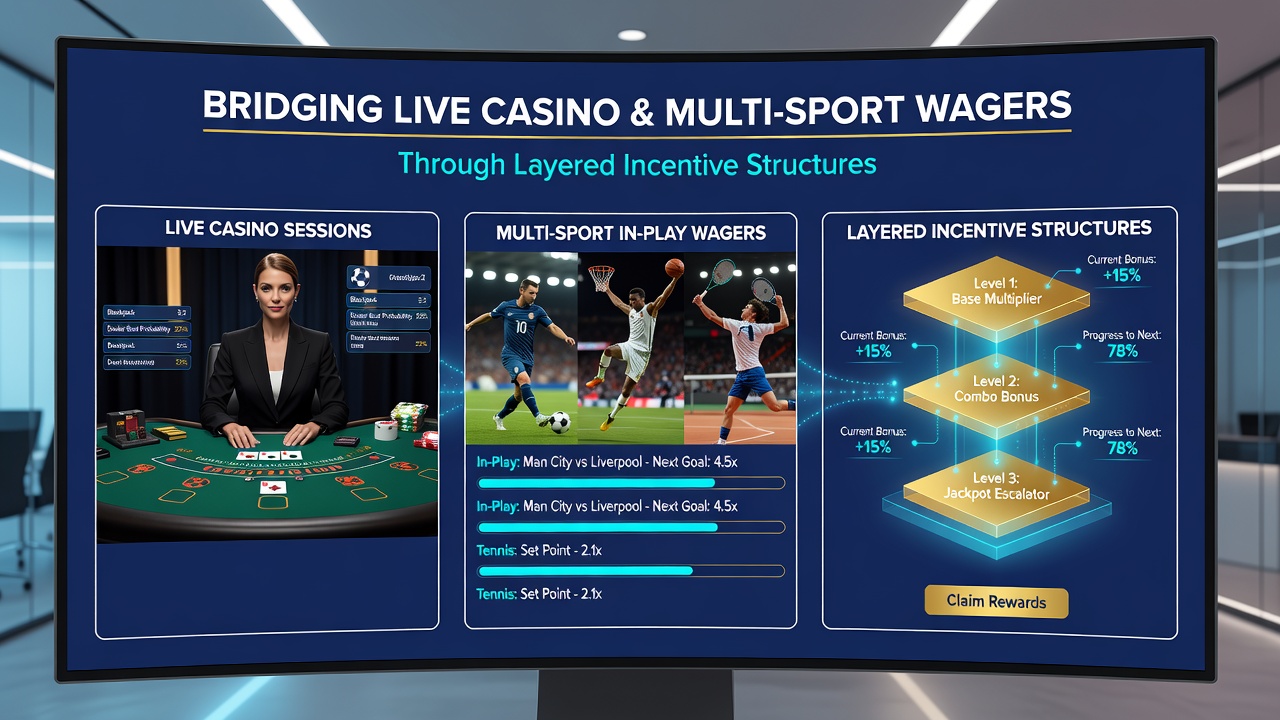
Layered structures usually begin with a base casino incentive such as a percentage cashback on net losses from roulette or blackjack streams, while subsequent tiers activate once a player places a qualifying in-play wager on an ongoing match. The second layer might double the cashback rate or add a multiplier to any winnings generated from the sports bet, whereas the third tier could release a fixed credit once total activity across both verticals reaches a preset threshold.
These progressions rely on unified player accounts that record every transaction in real time, allowing the system to apply the next reward automatically without requiring separate claims. Observers note that such automation reduces friction and keeps participants engaged across longer periods, particularly during evenings when live tennis and basketball events overlap with peak casino traffic.
Multi-Sport In-Play Integration Patterns
Many operators now synchronize live casino promotions with in-play odds from several sports simultaneously rather than focusing on a single league. A player finishing a blackjack session might receive a token valid for a basketball quarter-total or a tennis game set spread, with the reward value scaled according to the amount already wagered at the table. This approach draws on data showing that participants who receive sports tokens immediately after casino play demonstrate higher retention rates over subsequent weeks.
Research compiled by the Alcohol and Gaming Commission of Ontario highlights how Canadian platforms have refined these linkages, reporting measurable increases in session length when rewards span both verticals. Similar patterns appear in Australian markets where the Australian Communications and Media Authority tracks operator disclosures that detail combined casino and sports bonus uptake.
Player Journey Examples Across Platforms
One documented flow starts with a user joining a live European roulette table and accumulating twenty minutes of playtime, after which the platform issues a small stake-free bet on an active football match. If that in-play wager succeeds, the same account unlocks an elevated cashback percentage for the next casino session, creating a closed loop that encourages continued movement between products.
Another sequence pairs live blackjack hands with basketball in-play props, where each winning hand contributes points toward a multiplier available only on the next basketball quarter. Operators adjust these point thresholds monthly based on aggregated behavioral data, ensuring the structure remains aligned with actual participation trends observed through June 2026.
Regulatory and Reporting Considerations
Jurisdictions outside the UK maintain distinct reporting requirements for cross-product incentives. Canadian provincial frameworks, for instance, require operators to separate bonus liabilities by vertical in monthly filings, while Australian state regulators request disclosure of any combined reward that could influence player expenditure across casino and sports offerings. These rules shape how layered structures are presented to users, often mandating clear labeling of terms that apply when rewards transition from one product type to another.
Industry associations such as the European Gaming and Betting Association have published guidance documents outlining best practices for transparent communication of multi-tier offers. The guidance emphasizes consistent display of qualifying criteria and expiry conditions, particularly when live events create time-sensitive opportunities for reward activation.
Conclusion
Layered incentive designs continue to evolve as operators refine the technical connections between live casino environments and multi-sport in-play markets. Figures released through mid-2026 indicate sustained adoption of these frameworks across regulated regions, supported by unified account systems that track and convert activity automatically. Regulatory bodies in Canada and Australia maintain oversight through periodic reporting, ensuring that the structures remain compliant while accommodating observed patterns of player movement between verticals.