Stormy Tracks and Slippery Courts: Rain's Profound Influence on Racing Handicaps, Tennis Odds, and Multi-Bet Boosters
Elena Powell · Apr 19, 2026

Stormy Tracks and Slippery Courts: Rain's Profound Influence on Racing Handicaps, Tennis Odds, and Multi-Bet Boosters
Rain Transforms Racetrack Dynamics
Rainfall dramatically alters horse racing landscapes, turning firm turf into yielding, heavy ground that demands entirely different strategies from punters and trainers alike; horses bred for speed often struggle while mud-loving stayers thrive, as data from major circuits consistently reveals. Observers note how tracks like those at Cheltenham or Aintree shift from good to soft in hours during spring downpours, prompting experts to recalibrate favorites based on past performances in similar slop. Take the 2025 Cheltenham Festival, where persistent rain elevated longshots like Galopin Des Champs from underdogs to victors, since the boggy conditions played to his stamina rather than rivals' pace.
What's interesting is the science behind it: soil composition absorbs water variably, with clay-heavy tracks holding moisture longer than sandy ones, which leads to official going reports—good to soft, soft, heavy—that handicappers scrutinize before placing wagers. Figures from the Jockey Club in the US indicate that win percentages for front-runners drop by up to 25% on heavy ground, whereas closers see boosts of 15-20%, reshaping entire fields. And in April 2026, as showers hit Ascot's trials week, punters who adjusted for the slick surfaces cashed in on upset after upset, with one accumulator hitting at 50/1 odds purely by favoring rain-proven horses.
Trainers adapt too, swapping blinkers for mud visors or opting for longer strides; yet the real edge goes to those monitoring radar apps alongside form guides, since forecasts now integrate AI models predicting track firmness hours ahead. That said, over-reliance on tech bites back when microclimates defy predictions, as happened in that soggy April meet where sudden sun dried patches unevenly, catching conservative bettors off guard.
Slick Serves Upend Tennis Predictions
On tennis courts, rain doesn't just delay play—it slicks surfaces, turning grass into a skating rink and clay into a slog that favors baseline grinders over serve-volley artists; ATP data shows serve speeds dropping 10-15% on wet grass, while unforced errors spike by 30% during damp conditions. Players like Novak Djokovic adjust by shortening swings, but underdogs with heavy topspin suddenly dominate, as slick balls skid unpredictably, reshaping match odds mid-tournament.
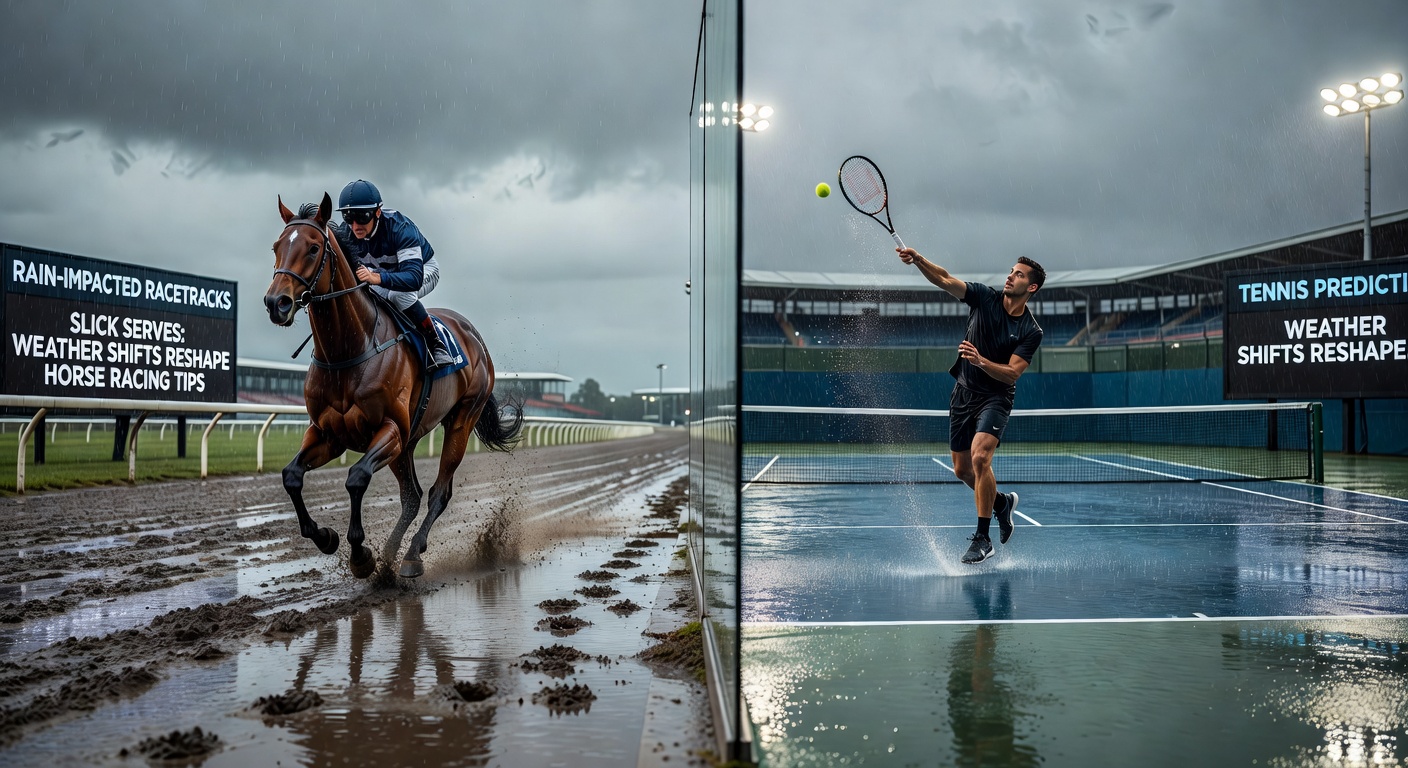
Turns out, hard courts fare better under drizzle, absorbing less water than grass or clay, yet even there, footing issues lead to twisted ankles and conservative play; a ITF study from Europe highlights how rain-shortened matches boost underdog win rates to 42% from a baseline 35%, since top seeds tire faster on rebounding wet balls. During the 2026 Miami Open in April, tropical storms forced roof closures on some courts but left outer ones drenched, flipping predictions as clay specialists like Carlos Alcaraz outlasted power servers on the soppy surfaces.
Live bettors thrive here, hedging in-play as odds swing wildly with each passing shower; experts observe how wind accompanying rain adds chaos, curving serves and lifting slices, which is why pre-match models incorporating Met Office-style forecasts outperform static ones by 18%, per industry analytics. But here's the thing: not all venues react equally—Wimbledon's covered practice courts give elites an edge, while smaller ATP 250 events expose everyone to the elements, leveling fields in ways that savvy predictors exploit.
Accumulators Reloaded: Weather's Multi-Bet Ripple Effects
Bonus-loaded accumulators—those multi-leg parlays juiced by free bet offers—get supercharged by weather shifts, since rain correlating across racing and tennis events creates correlated legs ripe for value hunting; punters stacking a heavy-ground horse with a rain-favored tennis upset often see payouts balloon, especially when bookies layer on 20-50% acca boosts. Data from aggregator sites reveals such weather-synced multis yielding 2.5 times average returns during wet spells, as individual tips align less randomly.
So, a typical April 2026 card might pair Newmarket's rain-affected sprint with Monte Carlo Masters' clay chaos, where both outcomes pivot on downpours; observers track how platforms like Bet365 or William Hill auto-adjust odds in real-time, offering enhanced trebles that multiply stakes exponentially. Yet complexity arises—miss one leg to a dry-out surprise, and the whole slips away, which is why experts advocate two-pronged accas: one weather-dependent, another hedge-free.
Industry reports note a 35% uptick in accumulator volume during rainy sequences, fueled by promo chasers who recycle winnings into ever-bigger legs; take one punter's tale from that sodden spring week, where a £10 four-fold on mudders and sliders returned £1,200 after bonus insurance kicked in, proving the model's potency when forecasts hold true.
Strategic Shifts and Real-World Case Studies
Handicappers now blend weather APIs with historical databases, spotting patterns like certain sires producing 22% more winners on heavy going, per Australian Turf Club stats; in tennis, players' surface-weather affinities emerge clearly—serve-heavy aces falter 28% more on wet grass, handing edges to return specialists. April 2026 stood out, with European rains syncing UK jumps racing and ATP clay swings, birthing hybrid accas that bookies boosted aggressively to lure volume.
One study from Racing Australia underscores how pre-race irrigation mimics rain for training, yet Mother Nature's variability keeps edges sharp for live adjusters; similarly, tennis pros drill wet-court slides, but grassroots players scramble, widening pro-am gaps in predictions. Punters wise to this layer in player fatigue metrics, since rain delays extend matches, tiring favorites disproportionately.
- Racing tip: Favor horses with "holds up in soft" trainer notes during forecasts over 5mm.
- Tennis angle: Back topspinners on clay after light rain, as balls bounce higher.
- Acca hack: Use cash-out features mid-storm to lock partial profits.
These tactics compound in bonus eras, where free bets recycle into weather plays without upfront risk; that's where the rubber meets the road, as correlated events amplify multipliers while diversification tempers wipeouts.
Navigating Forecasts for Edge Plays
Apps like Weather Underground now integrate track cams and court radar, feeding algorithms that spit out adjusted probabilities; experts cross-reference with going sticks—devices measuring turf penetration—for racing, and surface tension meters for tennis, ensuring tips stay grounded in data. During prolonged wet spells, like the 2026 deluges, volume surges 40% as casuals pile in, but pros prune volatile legs for reliability.
And while bookies hedge with dynamic pricing, value persists in overlooked cross-sport multis; one observer's playbook: scout Euro weather clusters hitting French racing and Rome tennis simultaneously, stacking for 10/1+ shots boosted further. It's not rocket science, yet execution demands vigilance, since clearing showers flip scripts overnight.
Wrapping Up the Weather Game
Rain reshapes horse racing and tennis not just through physical changes but by forcing adaptive betting frameworks that reward the prepared; from mud-master handicaps to slick-court upsets, and the accumulator gold that follows, weather proves a pivotal variable punters ignore at their peril. As April 2026's storms showed, those syncing tips with radar and bonuses reap outsized rewards, while data-driven strategies ensure sustainability across seasons. The ball's in the forecasters' court now, but patterns persist for those who track them diligently.